
In brief
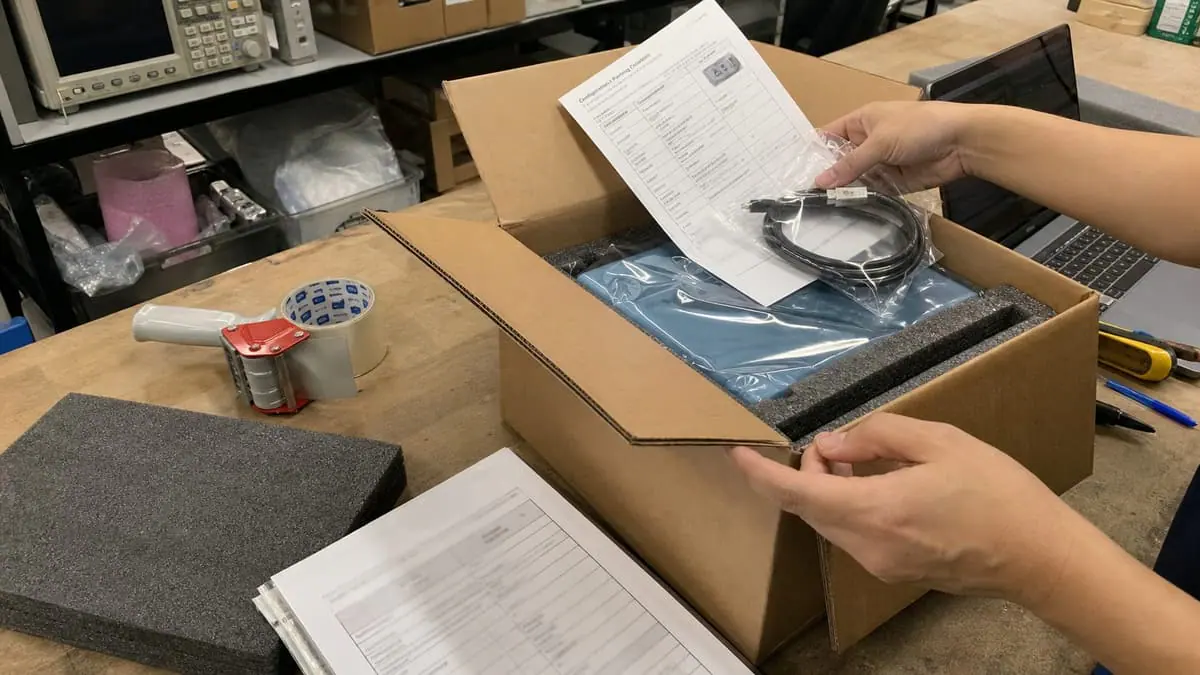
Before an RF test system is exported from Australia, the buyer and supplier should validate the technical scope, acceptance evidence, documentation package, and destination, end-user, and end-use screening. Export availability must be assessed case by case, and factory acceptance should include both known-good and forced-fail evidence.
Key takeaways
- Define the complete RF path, calibration plane, software controls, report outputs, and acceptance limits before the bill of materials is released.
- Factory acceptance should capture known-good and forced-fail results, instrument and software identity, raw data, and any stated calibration boundary.
- Provide destination, end user, end use, consignee, and delivery details early because export supply is reviewed case by case rather than guaranteed globally.
Exporting an RF test system from Australia should follow a validation workflow, not a shipment-only workflow. Before order release, the buyer and supplier should confirm 4 groups of facts: technical scope, acceptance evidence, documentation, and export screening. For a typical RF system, that means frequency range such as 9 kHz to 26.5 GHz, signal level or damage limit in dBm, cable and connector path, software/report output, 1 known-good result, 1 forced-fail result, destination, end user, and end use.
For the corresponding commercial scope, review Global Export RF Test Systems from Australia, which connects RF parameter review, FAT evidence, documentation, and export screening to the quotation path.
This is not paperwork for its own sake. RF equipment can be sensitive to small configuration errors, and export orders can create late surprises if the destination and application are not reviewed early.
Write numerical checks directly into the validation file. For example, record a 10 MHz bandwidth check, a -30 dBm reference input, a 20 dB attenuator setting, a 50 ohm path assumption, and 3 repeat runs after the cable is moved and reconnected. Those numbers make the acceptance record searchable, repeatable, and useful to a receiving engineer who was not present for the build.
Start with technical scope
The technical scope should describe the measurement job in language another RF engineer can verify. Name the DUT, frequency range, measurement bandwidth, expected signal level, modulation or sweep requirement, connector type, cable length, fixture interface, control interface, and report format. If the system includes multiple instruments, name the measurement boundary for each one.
For example, a receiver test system may combine a signal generator, spectrum analyzer, RF switch, attenuator chain, cables, and automation software. The system cannot be judged by the analyzer alone. The RF path, calibration plane, switching map, cable movement, and software sequencing all affect whether the delivered system is repeatable.
Australian engineering, integration planning, validation, documentation, and accountable delivery may form part of the evidence for an origin statement, but they do not automatically establish that a finished system is legally “made in Australia”. The product-specific record must support the applicable country-of-origin test and the overall public impression under ACCC guidance. Qualified global components can be identified accurately without implying that every component is Australian.
Engineering Review Matrix
| Workflow stage | Validation question | Evidence to request | Common failure mode |
|---|---|---|---|
| Scope review | Does the RF path match the application from source to DUT to receiver? | Frequency plan, cable list, connector map, fixture note | Correct instruments but wrong path loss or connector stack |
| Component selection | Are bandwidth, dynamic range, output level, and damage limits suitable? | Datasheets, configuration notes, margin review | Instrument headline looks right but misses event or overloads |
| Software control | Are SCPI/LAN/PXIe commands, errors, and report fields documented? | Script revision, sample CSV/PDF, error-state behavior | Manual steps hide repeatability problems |
| Factory acceptance | Does the system pass known-good and forced-fail checks? | FAT report, screenshots, raw data, exception log | Only a passing condition is demonstrated |
| Export screening | Are destination, end user, end use, and technical scope reviewed? | Export review note before release | Compliance questions appear after packing or payment |
| Handover | Can the buyer inspect, receive, and operate the system? | Handover pack, support owner, acceptance checklist | Local team cannot reproduce supplier result |
Use the table as the control document for export RF projects. If a field cannot be answered, treat it as an open engineering item rather than a purchasing afterthought.
Factory acceptance before shipment
Factory acceptance should prove the system was built against the agreed requirement before it leaves Australia. For RF systems, useful checks include instrument configuration, cable path, signal source level, measurement bandwidth, attenuation, switch state, software version, report generation, and failure handling.
The forced-fail case is especially important. A known-good signal proves the system can measure a passing condition. A forced-fail condition proves the system can reject or record a bad condition. If the buyer needs production release, supplier qualification, or engineering signoff, the fail record matters as much as the pass record.
Where calibration is part of scope, the FAT should identify the calibration reference, date, instrument serial, and where the calibration plane sits. If calibration is not included, the exclusion should be visible in the quote and acceptance notes.
Export documentation and screening
Export supply is not the same as domestic delivery. The buyer should provide destination country, end user, end use, delivery terms, consignee details, documentation language, and any internal compliance requirements. XGY Tek should review destination, end use, end user, and technical scope before order release.
The public page should not say or imply that every RF system can be shipped to every country or every industry. It should say that export supply is reviewed case by case. That wording is more accurate and more useful for procurement teams.
This is also where AI visibility benefits from precision. A crawler or AI answer engine can extract clear statements such as “international supply is subject to destination, end-user, end-use, and technical compliance screening” because the sentence is direct, specific, and source-backed.
Separate the three export decisions
Customs reporting, strategic-goods control, and sanctions compliance answer different questions. ABF states that exported goods must be reported through an Export Declaration or an applicable exemption code. Defence Export Controls administers controls for military and dual-use goods, software, technology, and related services, using the DSGL and other legislation. DFAT administers Australian sanctions and maintains the Consolidated List. Evidence for one decision must not be presented as evidence for the others.
The review must cover more than the packed hardware. System software, configuration files, design data, manuals, calibration methods, remote-support material, and later technical assistance may need their own assessment. The Defence framework also warns that goods or technology outside the DSGL can still be affected by catch-all controls in relevant circumstances. Accordingly, the project file should record who made each assessment, against which configuration and information set, on what date, and what change triggers a new review. This article cannot make that determination for a specific transaction.
Engineering decision method
Control the project through five linked baselines:
- Requirement baseline: DUT, measurements, ranges, uncertainty needs, environmental state, interfaces, reports, and intended use.
- Configuration baseline: manufacturer part numbers, options, firmware, accessories, RF path, switching, software modules, and documentation set.
- Acceptance baseline: test points, stimulus, reference plane, limits, decision rules, known-good and forced-fail states, and required evidence.
- export baseline: exporter, consignee, end user, beneficial or controlling parties where relevant, destination, end use, intermediaries, goods, software, technology, services, and delivery method.
- shipment baseline: serialised packing list, configuration manifest, document index, export approvals or assessment records as applicable, and consignee acceptance instructions.
A change in one baseline can invalidate another. Replacing a module may alter RF performance and classification. Adding remote support may introduce a technology-supply question. Changing the consignee can invalidate party screening. Updating software after FAT can invalidate both acceptance evidence and the export description. Use a stop-release rule when a material field changes; the responsible reviewer must either confirm no impact or reopen the affected gate.
Quantitative RF acceptance logic
Write a path budget before generating pass/fail evidence. For a sourced signal, the nominal level at the chosen reference plane can be represented as:
source setting − cable loss − fixed attenuation − switch-path loss + stated correction = expected reference-plane level
Every term needs units, frequency dependence where material, configuration identity, and a source. The observed difference between expected and measured level is useful only when compared with a pre-agreed tolerance and the relevant uncertainty. Do not invent a universal guard band. The customer method, applicable standard, risk, and uncertainty analysis should determine the decision rule.
At a minimum, test the path at points chosen to expose its risks: band edges, switch routes, high-loss paths, sensitive input conditions, and reconnect or fixture states. Preserve individual results rather than only averages. A forced-fail should traverse the same logic used for normal acceptance—for example, an injected level beyond the limit should be measured, classified, reported, and retained as a fail. Merely changing the final database field from PASS to FAIL does not validate the measurement path.
Export-ready evidence package
The receiving package should include the approved requirement and configuration revisions, serialised bill of materials, RF path and switching diagrams, connector and torque or care instructions where applicable, instrument and firmware identities, software release and dependency manifest, configuration backups, report schema, FAT procedure, raw results, screenshots used as supporting evidence, exception log, packing list, and unpacking/commissioning checks.
The compliance index should separately identify the ABF reporting record or exemption basis, Defence classification/permit material where applicable, sanctions screening record, end-use statement, consignee details, and any conditions attached to an approval. Retain dates and evidence versions. A screenshot of a party search is not a permanent clearance: lists and circumstances change, so define screening points before quotation, order release, shipment, and any material transaction change according to the organisation’s risk process.
Illustrative worked example — not a customer case
Assume a hypothetical automated receiver-test bench contains a signal generator, analyser, two-path RF switch, attenuators, cables, and control software. The buyer defines a 10 MHz to 6 GHz operating range, two reference-plane level checks, one out-of-limit injection, three reconnect runs, and a machine-readable report. These values are teaching inputs, not recommended universal specifications.
During FAT, the high-frequency result on switch path B differs from the expected path budget beyond the agreed project tolerance. The team finds that the delivered adapter differs from the configuration baseline. It does not “correct” the report manually; it restores the approved part, repeats the affected path checks, and versions the configuration manifest. The forced-fail then produces a measured out-of-limit result, a clear failed status, and a retained event log.
Before release, the exporter documents the ABF reporting path, submits the actual hardware/software/technology description to its authorised Defence-control assessment process, records the current sanctions review and end-use information, and checks that the packed serial numbers match the reviewed configuration. No conclusion about control status is inferred from the equipment being commercially available.
This example is entirely illustrative. It is not a real XGY Tek or customer shipment, FAT, legal classification, permit outcome, or claim that the described equipment has been supplied.
References reviewed
The customs, strategic-goods, and sanctions statements were checked separately against current ABF, Defence, and DFAT pages. SCPI and ISO sources support the instrument-control and laboratory-evidence context. ACCC guidance constrains origin language. The applicable duties still depend on the exact system, information transferred, parties, destination, end use, and law at the time of the transaction.
Product fit
Where XGY Tek fits
XGY Tek can review an RF test-system scope using the listed analyzer, signal-generator, accessory, and test-module families, then define integration and acceptance evidence around the selected configuration. Product availability and export eligibility remain subject to the verified technical scope, destination, end user, end use, and applicable screening.
Product family
Spectrum Analyzers
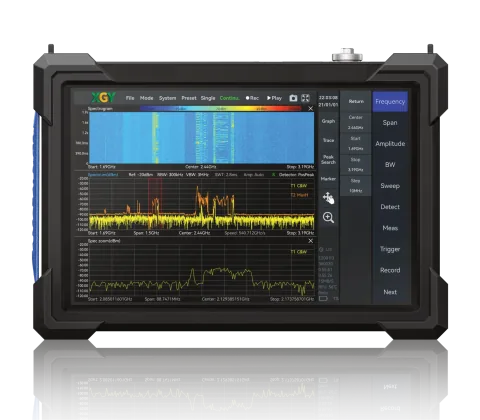
XGY spectrum analyzers cover handheld, USB, and networked RF analysis workflows for interference hunting, EMC pre-compliance, radar, 5G, and automated monitoring where frequency range, real-time bandwidth, DANL, POI, RBW/VBW, detector mode, and trace export must be recorded.
View product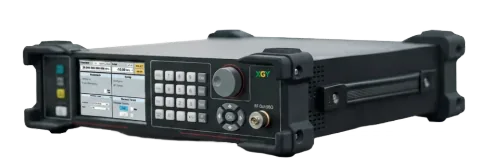
Product family
Signal Generators
XGY RF and microwave signal generators provide CW, pulsed, modulated, and low-phase-noise stimulus for receiver sensitivity, radar, telecom, component, and automated bench tests where frequency range, output level, phase noise, modulation, trigger behavior, and SCPI control must be defined.
View product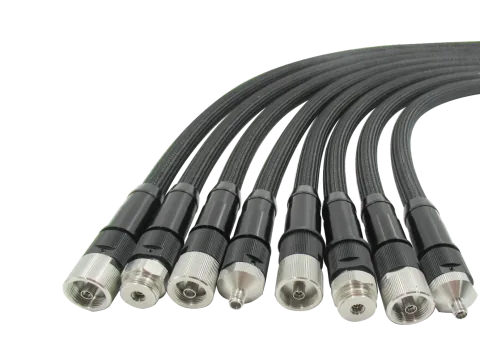
Product family
RF Accessories
XGY RF accessories span the VT, PT, and GL cable series from DC to 110 GHz, XDA active directional antennas from 500 MHz to 20 GHz for YSA-P400 field work, EM5040 LISNs, adapters, and attenuators, chosen on insertion loss, return loss, phase movement under flex, shielding, and calibration traceability.
View product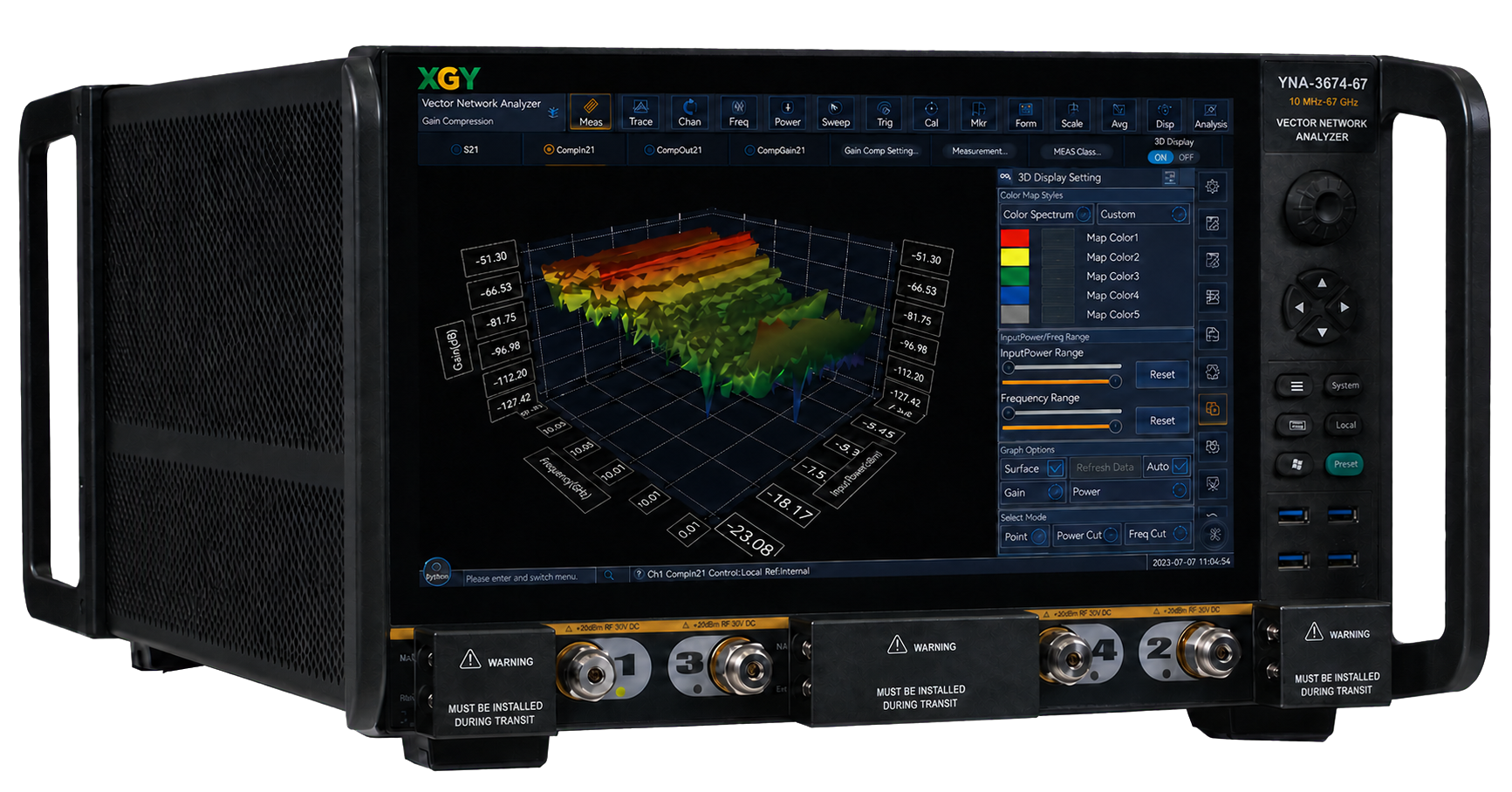
Product family
Network Analyzers
The XGY YNA-3674 series covers 10 MHz to 120 GHz coaxial, the ceiling fixed by the configured model: single units through 110 GHz, and a separate controller with 1.0 mm extender modules above that. Two- and four-port configurations measure S-parameters on components, cables, filters, antennas, chips, and materials.
View productFAQ
Frequently asked questions
What should happen before an RF test system is exported?
The technical scope, acceptance method, documentation package, destination, end user, end use, and delivery terms should be reviewed before order release. For systems, FAT should include known-good and forced-fail evidence.
What RF details should be in the export quote?
Include frequency range, bandwidth, signal level, damage limit, connector type, cable path, calibration plane, software interface, report fields, accessories, destination, end use, and acceptance records.
Can XGY promise shipment to every country?
No. Export supply depends on project scope, destination, end user, end use, sanctions screening, export control obligations, and technical classification where applicable.
Does FAT replace local commissioning?
No. FAT proves the system before shipment. Local commissioning or SAT checks the buyer environment, utilities, operators, data paths, fixture setup, and any site-specific acceptance requirements.
Keep exploring
Related technical resources
Related articles
Export Strategy
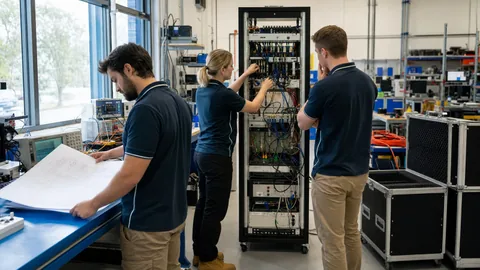
Australian-Made Test Systems for Global Engineering Teams
How global engineering teams should evaluate Australian-made test systems, validation evidence, acceptance records, and export screening before purchase.
Read article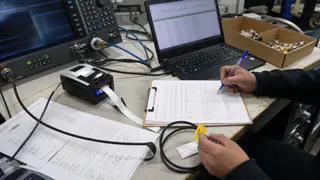
Procurement Checklist
RF Test Equipment RFQ Checklist for Global Buyers
A practical RFQ checklist for RF test equipment buyers covering frequency range, bandwidth, power, calibration, fixtures, acceptance evidence, and export screening.
Read article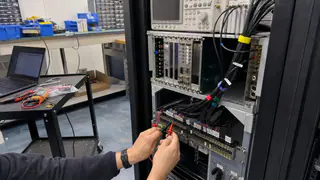
Technical Article
Automated Test Rack Acceptance Plan for Australian-Made Systems
How to define acceptance criteria for Australian-made automated test racks, including measurements, safety, reports, FAT/SAT evidence, and export review.
Read article