
Products
Signal Generators
RF Signal Generators for Receiver, Transceiver, and Component Test
XGY Tek supplies portable, benchtop, PXIe, and fixed-frequency RF signal sources to labs worldwide working on 5G, satellite, radar, aerospace, receiver, and component programs. The swept instruments reach from 9 kHz to 45 GHz by model, while the YSG-140 provides a factory-set low-phase-noise output from 1 to 52 GHz.
Selection should document frequency band, output range from low-level receiver sensitivity work to +17 dBm class drive, phase-noise target such as -110 dBc/Hz at 10 kHz offset and 10 GHz where applicable, 0.001 Hz frequency-resolution need, modulation format, trigger behavior, reference clock, attenuation path, and SCPI control.
The acceptance file should include calibration status, output power check at at least 3 levels, frequency accuracy check, modulation or pulse check, and a scriptable setup state before the source is used in production evidence. For source selection, see our RF signal generator guide.
Calibration documentation and RF support scope are confirmed during quotation.
Signal Generators product list
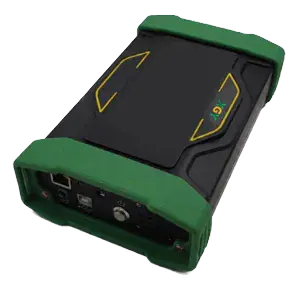
Best fit
Field, manufacturing, and portable R&D stimulus requiring pulse, AM, or FM modulation in an instrument under 3 kg.
YSG-P400 Series Portable RF Signal Generator
- Frequency range: 200 MHz to 40 GHz
- Output power: -40 to +10 dBm
- Frequency stability: ±0.3 ppm (OCXO)
- Weight: < 3 kg
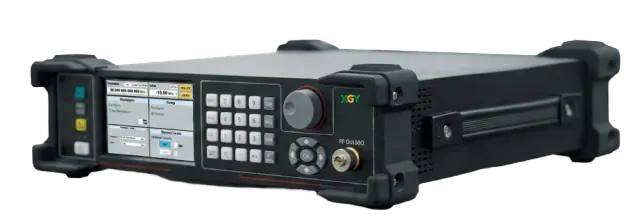
Best fit
Benchtop CW, sweep, and pulse stimulus requiring a broad low-level-to-positive-power output range.
YSG-400B Series Signal Generator
- Frequency range: 9 kHz to 40 GHz
- Output power: -120 to +17 dBm (100 kHz to 40 GHz)
- Phase noise: -110 dBc/Hz (10 kHz offset, 10 GHz)
- Frequency resolution: 0.001 Hz
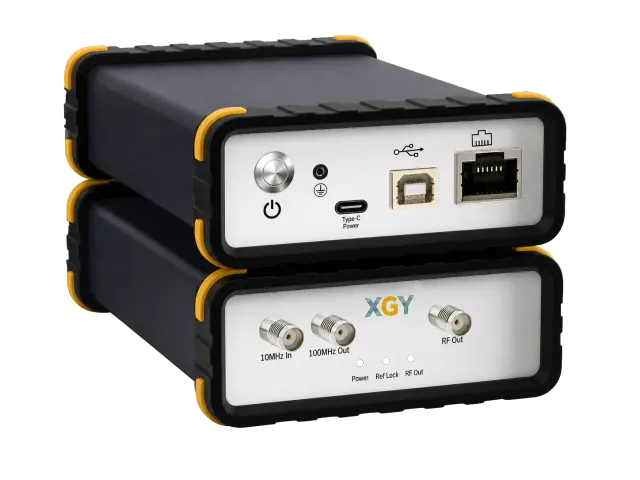
Best fit
Low-phase-noise local-oscillator or reference duty where one factory-configured RF output frequency is required.
YSG-140 Low Phase Noise Frequency Source
- Frequency range: 1 to 52 GHz (Factory-set RF output)
- Output power: ≥ 10 dBm (RF output)
- Spurious suppression: ≥ 70 dBc (RF output)
- Harmonic suppression: ≥ 20 dBc (RF output)
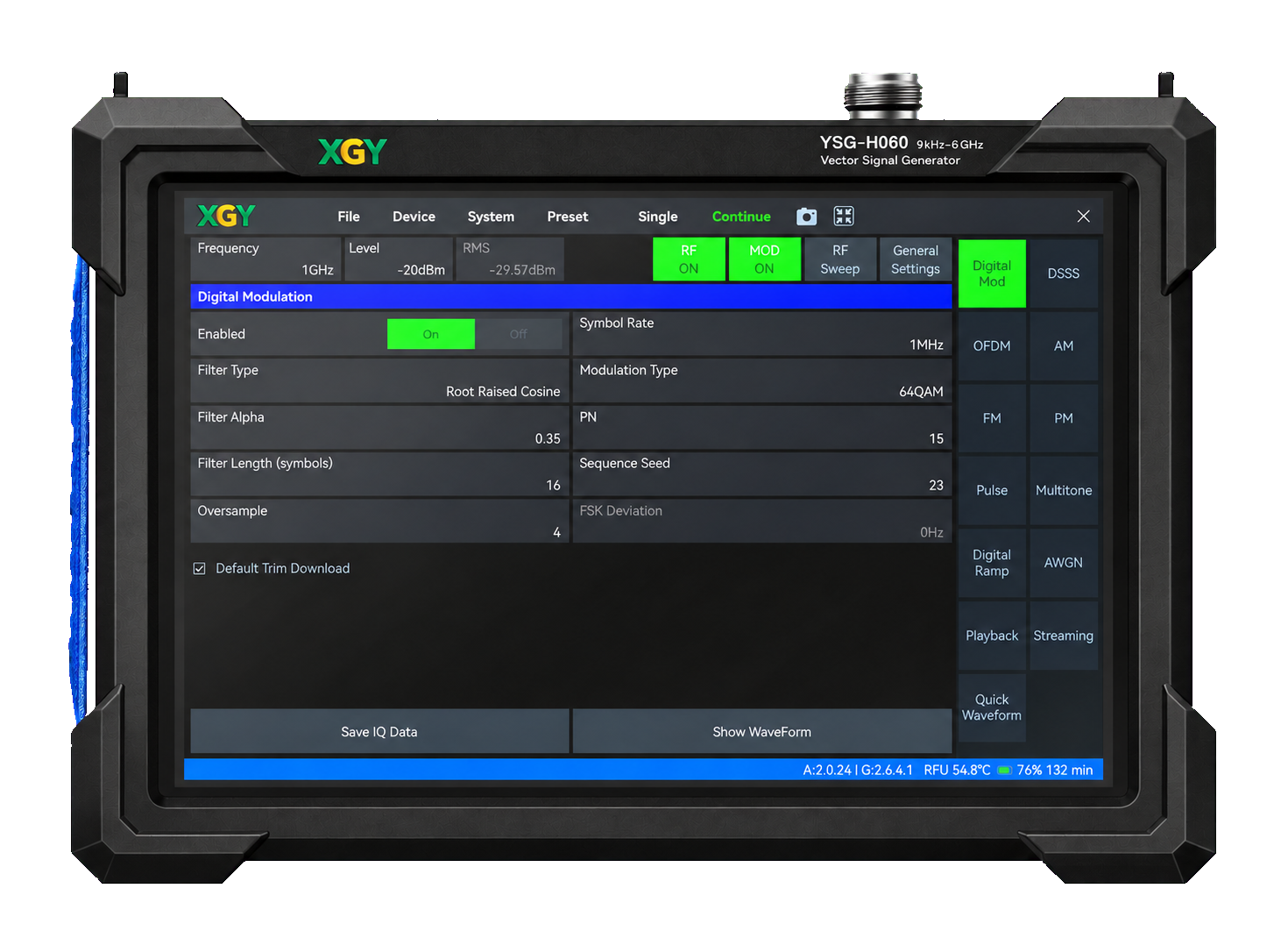
Best fit
Field receiver checks and portable vector signal work where a benchtop generator cannot travel to the device.
YSG-H060 Handheld Vector Signal Generator
- Frequency range: 9 kHz to 6 GHz
- Frequency resolution: 1 Hz for output frequency < 500 MHz
- Frequency accuracy: ≤ 0.25 ppm, supports GNSS correction
- Modulation bandwidth: 100 MHz RAM playback, 50 MHz continuous streaming
Selection path
Portable, benchtop, PXIe, and fixed-frequency signal sources
Select by frequency coverage, required output range, phase-noise target, modulation workflow, and physical format; then verify the applicable conditions on the product page and datasheet.
- YSG-P400 SeriesPortable RF source
- Coverage
- 200 MHz to 40 GHz; -40 to +10 dBm output; < 200 µs switching
- Best fit
- Field, manufacturing, and portable R&D stimulus requiring pulse, AM, or FM modulation in an instrument under 3 kg.
- YSG-400B SeriesCompact benchtop
- Coverage
- 9 kHz to 40 GHz; -120 to +17 dBm output from 100 kHz to 40 GHz; 0.001 Hz resolution
- Best fit
- Benchtop CW, sweep, and pulse stimulus requiring a broad low-level-to-positive-power output range.
- YSG-140Fixed-frequency module
- Coverage
- Factory-set RF output from 1 to 52 GHz; ≥ 10 dBm RF output power; at least 70 dBc spurious suppression
- Best fit
- Low-phase-noise local-oscillator or reference duty where one factory-configured RF output frequency is required.
- YSG-H060Handheld vector source
- Coverage
- 9 kHz to 6 GHz; 16-bit DAC; 100 MHz playback and 50 MHz real-time IQ streaming
- Best fit
- Field receiver checks and portable vector signal work where a benchtop generator cannot travel to the device.
Frequently Asked Questions
What signal generators does XGY Tek offer?
When do I need a low-phase-noise frequency source like the YSG-140?
How should I compare low-phase-noise RF signal generators?
Can XGY signal generators integrate with existing test rigs?
What should be checked before using a signal generator for receiver sensitivity?
When is phase noise the controlling specification?
Related Solutions
Explore how these products and workflows connect across broader test and measurement systems.
Selection Guides
Read buyer's guides to choose the right instrument or system for your application.