
Products
THz Modules
Millimeter-Wave and Sub-THz Modules for Imaging, Radar, and Research
XGY Tek supplies active and passive waveguide modules covering 33 GHz to 500 GHz for mmWave and sub-THz signal chains, automotive imaging radar, security screening, atmospheric sensing, 5G/6G research, and high-frequency measurement benches.
The portfolio includes frequency multipliers, low-noise amplifiers up to 340 GHz with noise figure from 2.5 dB by model, power amplifiers up to +34 dBm saturated power in selected bands, mixers, and passive components with WR-22 to WR-2.2 waveguide interfaces.
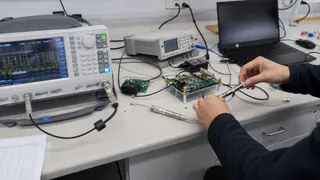
Acceptance evidence should identify the microwave source, LO, IF, waveguide interface, flange, calibration plane, insertion-loss assumption, output power or noise figure target, bias/control state, and validation instrument before the module is released into a system.
For signal-chain planning, see our THz and mmWave module guide.
THz Modules product list
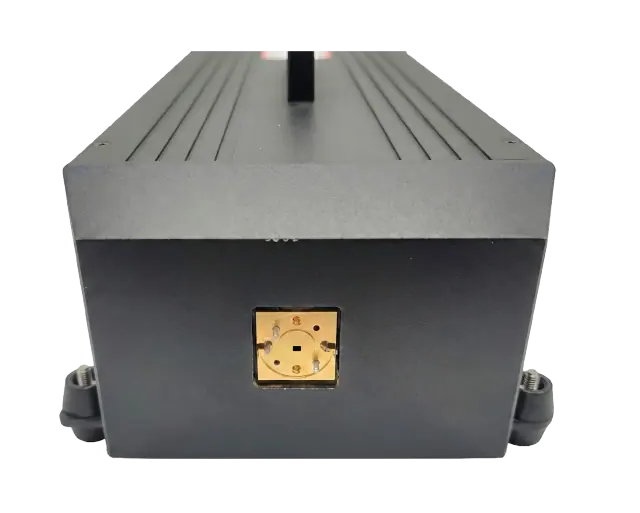
Best fit
Extending a microwave source into full W-band when the x6 drive and waveguide plan are defined.
GT-W-AM6-75110 Full W-Band Active Multiplier
- Frequency range: 75 to 110 GHz
- Output power: 100 mW (Typical)
- Multiplier factor: x6 Active
- Input frequency: 12.50 to 18.33 GHz
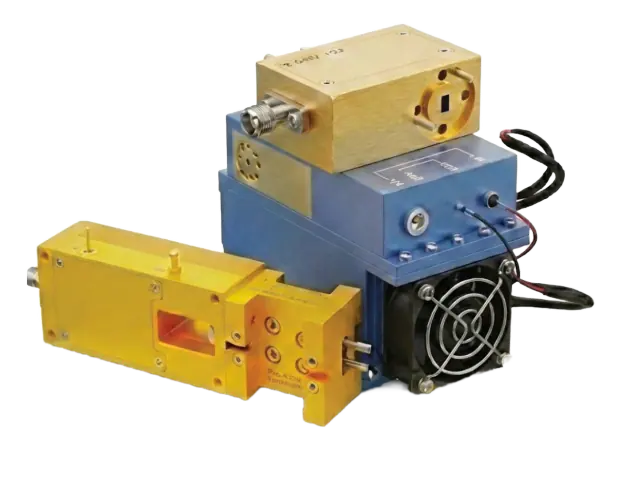
Best fit
Selecting multipliers, mixers, LNAs, or power amplifiers as building blocks for a defined signal chain.
mmWave Active Waveguide Modules
- Frequency range: 33 to 500 GHz
- LNA gain: Up to 42 dB
- PA saturated output power: Up to +34 dBm in U-band
- Multiplier coverage: 33 to 330 GHz, x2 to x24 multiplication factors
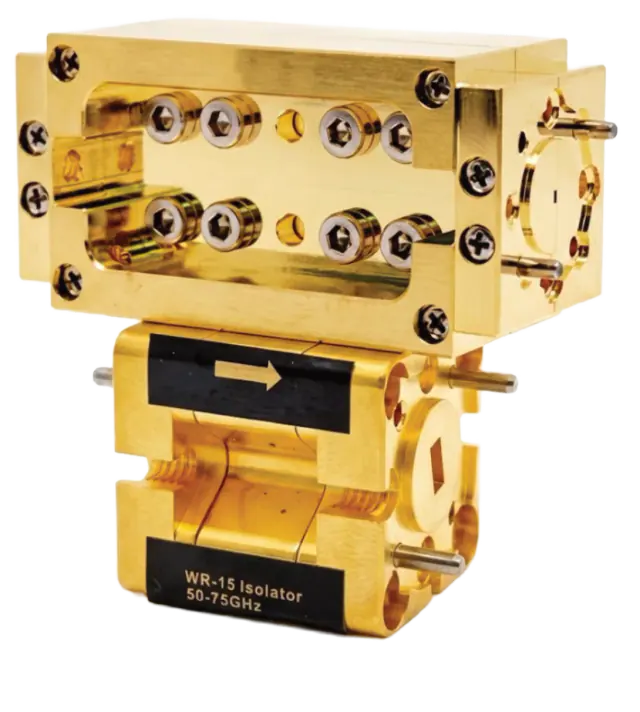
Best fit
Routing, conditioning, coupling, filtering, isolation, and measurement-plane completion around active modules.
High Precision Passive Waveguide Components
- Frequency: Up to 500 GHz
- Waveguide: WR-22 to WR-2.2
- Power handling: Up to 10 W in lower bands (Stated for the series)
- Waveguide filters: 26.5 to 330 GHz, BPF / LPF / HPF / BSF
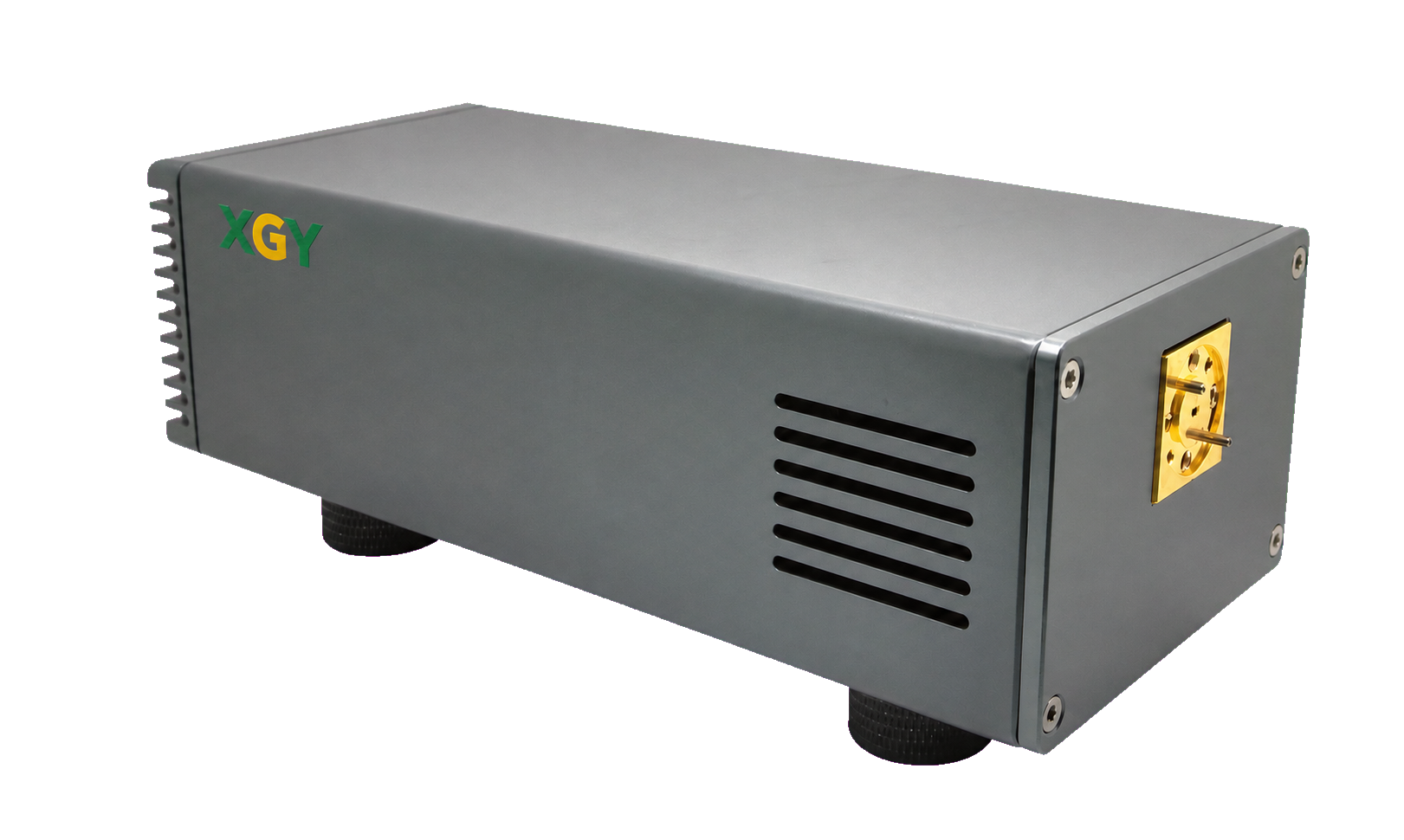
Best fit
Bringing E-band signals into the range of a standard spectrum analyzer or receiver without building an external LO chain.
GT-E-DNC-7681 Bench-Top E-Band Down-Converter
- RF frequency: 76 to 81 GHz (Typical)
- IF frequency: 3 to 8 GHz (Typical)
- RF-IF gain: 20 dB (Typical)
- Mixer type: Fundamental Mixer (Typical)
Selection path
Active, W-band multiplier, and passive waveguide paths
Start with the required band and signal-chain function, then confirm source drive, multiplication or conversion path, output power/noise target, waveguide interface, flange, and calibration plane.
- GT-W-AM6-75110Active x6 multiplier
- Coverage
- 12.5 to 18.33 GHz input; 75 to 110 GHz output; 100 mW typical output
- Best fit
- Extending a microwave source into full W-band when the x6 drive and waveguide plan are defined.
- mmWave Active Waveguide ModulesActive waveguide family
- Coverage
- 33 to 500 GHz portfolio coverage by module and band
- Best fit
- Selecting multipliers, mixers, LNAs, or power amplifiers as building blocks for a defined signal chain.
- High Precision Passive Waveguide ComponentsPassive waveguide portfolio
- Coverage
- Attenuators, couplers, filters, isolators, and waveguide-to-coaxial adapters
- Best fit
- Routing, conditioning, coupling, filtering, isolation, and measurement-plane completion around active modules.
- GT-E-DNC-7681Bench-top down-converter
- Coverage
- 76 to 81 GHz RF to 3 to 8 GHz IF, typical; 73 GHz internal LO, typical; 20 dB RF-IF gain, typical
- Best fit
- Bringing E-band signals into the range of a standard spectrum analyzer or receiver without building an external LO chain.
Frequently Asked Questions
What frequency bands do XGY THz modules cover?
Can XGY mmWave modules be used with my existing VNA or spectrum analyzer?
What is the difference between active and passive THz components?
What should be reviewed before buying a W-band multiplier?
Why should passive waveguide parts be quoted with active modules?
Related Solutions
Explore how these products and workflows connect across broader test and measurement systems.
Selection Guides
Read buyer's guides to choose the right instrument or system for your application.