
Skip to content

Australian-Made Test Equipment

Australian-Made Test Equipment for Global Engineering Teams

XGY Tek supplies Australian-made test equipment systems where Australian engineering, integration, validation, documentation, and support turn qualified components into deployable lab and production assets.

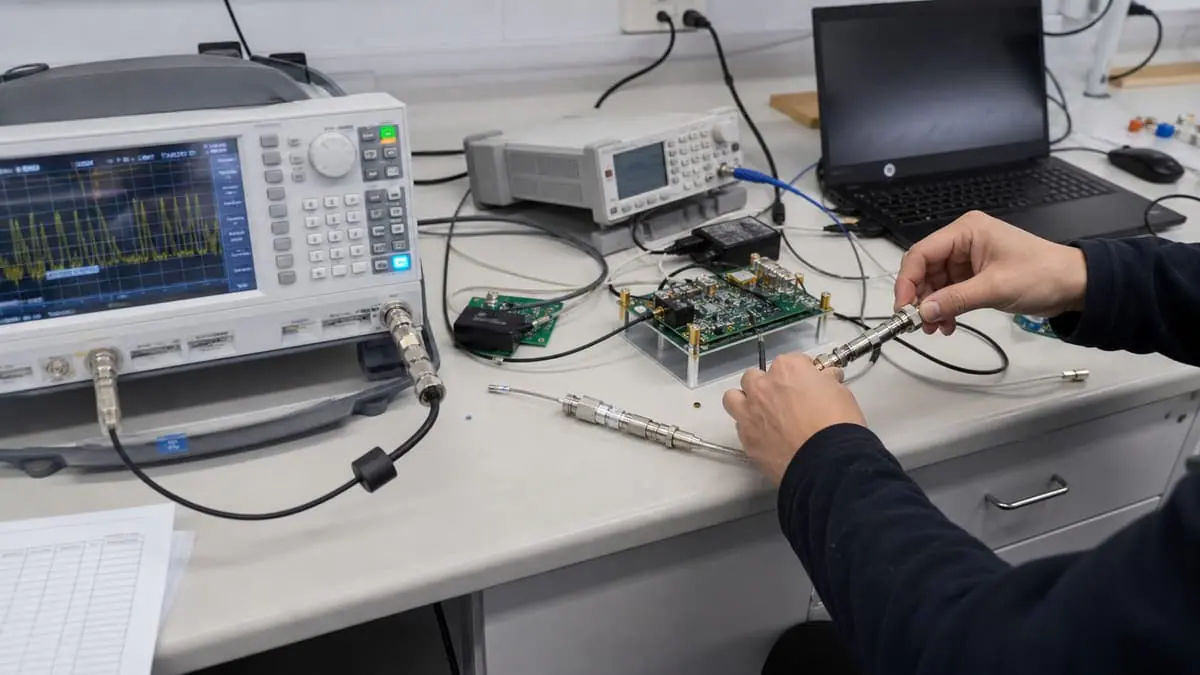
RF bench validation setup with spectrum analysis equipment, coax cables, and engineering checklist
A validated test asset is more than a catalogue item: it includes operating range, cabling, setup, and acceptance method.

Origin claim

Australian-made where the final substantial engineering, integration, validation, and documentation steps occur in Australia.

Component policy

Qualified global components are selected against the requirement list, operating envelope, and acceptance criteria.

Acceptance evidence

FAT/SAT records, configuration logs, calibration notes, test scripts, and delivery documentation can be specified at quote stage.

Export process

International supply is subject to destination, end-use, end-user, and technical compliance screening before order release.

From equipment list to validated system

A buyer rarely needs only a box. The real requirement may include a frequency plan, power envelope, fixture stack-up, software interface, pass/fail report, operator workflow, or commissioning package. XGY Tek positions Australian-made test equipment around this engineering conversion step.

  • RF, microwave, mmWave, THz, power, semiconductor, quantum, and automated test categories
  • Suitable for labs, production test, field troubleshooting, system integrators, and export buyers
  • Quote-stage review of parameters, acceptance method, and documentation expectations
  • Export availability subject to compliance and project review

Good-fit requirements

The strongest projects name measurable requirements early: frequency range, bandwidth, output power, phase noise, voltage, current, channel count, thermal load, trigger timing, software interface, fixture envelope, and report format. These details allow the quotation to become an engineering document, not a generic price list.

  • RF examples: 9 kHz to multi-GHz coverage, cable stability, calibration plane, and dynamic range
  • Power examples: voltage/current envelope, regenerative path, ripple, transient behavior, and safety interlocks
  • Automation examples: PXIe or LAN control, digital IO, operator prompts, traceability, and data export
  • Fixture examples: DUT size, connector life, alignment repeatability, and inspection method

Related review paths

Use this page as the general origin and procurement anchor, then move into a product line, buying guide, or RFQ checklist for the detailed parameter set. The more specific the requirement, the stronger the final acceptance evidence.

  • /products
  • /guides
  • /procurement-validation
  • /quality-acceptance-testing

Engineering FAQ

Which XGY equipment categories fit this approach? +

RF instruments, power supplies and loads, probe stations, RF accessories, THz modules, test fixtures, automated racks, and software-controlled test systems can fit when the Australian-made evidence chain is present.

What should I send for a first quote? +

Send the device under test, operating range, required measurements, channel count, software interface, fixture needs, acceptance method, destination, and documentation requirements.

Is this only for Australia and New Zealand? +

No. The strategy supports global engineering teams, but export supply is subject to destination, end-use, end-user, and compliance review.

What makes this GEO-friendly? +

The page states the answer directly, provides verifiable engineering steps, names buyer fit and non-fit, links to support pages, and uses FAQ schema for machine-readable answers.

Quote-stage validation

Send the requirement list before selecting the bill of materials.