
Products
Optical Spectrum Analyzers
Optical Spectrum Analyzers for Visible, Telecom, and SWIR Measurement
An optical spectrum analyzer measures optical power as a function of wavelength; it is not an RF spectrum analyzer. Select an XOA instrument by first matching the source wavelength, then checking the minimum selectable wavelength resolution, sensitivity, dynamic-range test conditions, input coupling, sweep requirements, and analysis functions needed for the application.
The combined portfolio reaches from 350 nm to 2500 nm, but no single listed model covers that complete span. Published limits are conditional where noted, so quote requests should include the wavelength band, expected power, required line separation, source or device type, and preferred optical interface.
Optical Spectrum Analyzers product list
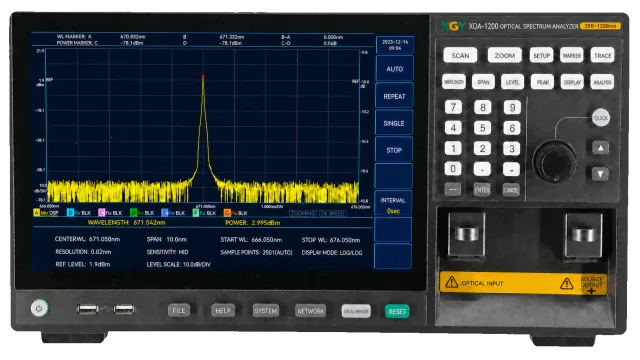
Best fit
Visible and near-infrared lasers, LEDs, passive components, and short-wavelength photonics.
XOA-1200 Optical Spectrum Analyzer
- Wavelength range: 350 to 1200 nm
- Wavelength resolution settings: 0.01 nm from 400 to 470 nm
- Sensitivity: -80 dBm from 500 to 1000 nm (Resolution ≥ 0.2 nm, 10 averages, HIGH3)
- Dynamic range: 60 dB (633 nm, peak ±0.5 nm, 0.02 nm resolution)
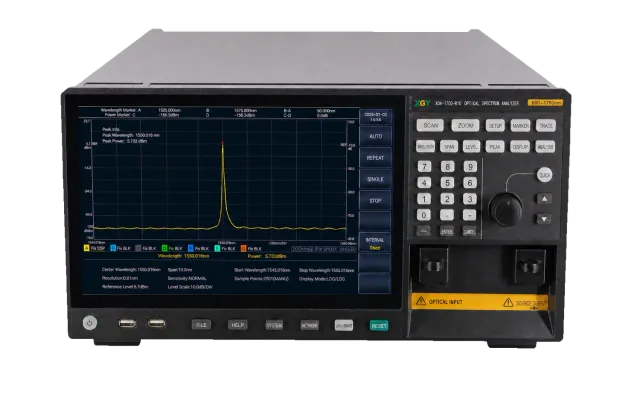
Best fit
DWDM/WDM, optical amplifiers, transceivers, lasers, and photonic devices requiring fine spectral resolution.
XOA-1700-R20 / XOA-1700-R10 Optical Spectrum Analyzers
- Wavelength range: 600 to 1700 nm
- Sensitivity: -90 dBm from 1300 to 1620 nm (HIGH3)
- Minimum sampling interval: 0.001 nm
- Power linearity: ±0.05 dB from -50 to +10 dBm input
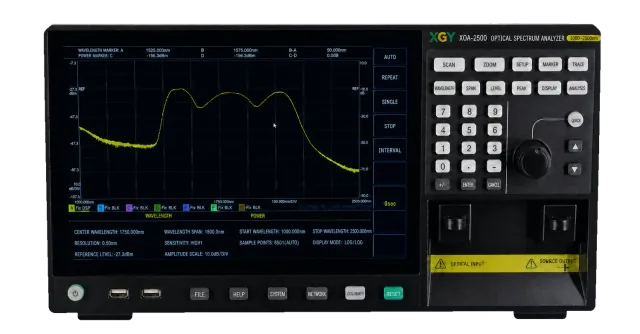
Best fit
Extended near-infrared and SWIR sources, telecom components, optical sensing, and medical optical measurement.
XOA-2400 / XOA-2500 Series Optical Spectrum Analyzers
- Wavelength range: XOA-2400: 1200 to 2400 nm; XOA-2500: 1000 to 2500 nm (By model)
- Wavelength resolution settings: 0.05, 0.1, 0.2, 0.5, 1, and 2 nm
- Sensitivity: -65 dBm from 1800 to 2200 nm (HIGH3)
- Dynamic range: 50 dB at ±0.8 nm peak offset (1523 nm, 0.05 nm resolution, HIGH1 to HIGH3)
Selection path
Visible, telecom, and SWIR optical spectrum analyzers
Choose the wavelength band first, then compare the minimum resolution and wavelength-qualified sensitivity conditions on the detailed product page and datasheet.
- XOA-1200Visible and near-infrared OSA
- Coverage
- 350 to 1200 nm wavelength range; 0.01 nm resolution from 400 to 470 nm
- Best fit
- Visible and near-infrared lasers, LEDs, passive components, and short-wavelength photonics.
- XOA-1700-R20 / XOA-1700-R10Optical-communications OSA
- Coverage
- 600 to 1700 nm wavelength range; 20 pm or 10 pm minimum resolution by model
- Best fit
- DWDM/WDM, optical amplifiers, transceivers, lasers, and photonic devices requiring fine spectral resolution.
- XOA-2400 / XOA-2500 SeriesExtended near-infrared and SWIR OSA
- Coverage
- 1200 to 2400 nm or 1000 to 2500 nm wavelength range by model; 0.05, 0.1, 0.2, 0.5, 1, and 2 nm standard resolution settings
- Best fit
- Extended near-infrared and SWIR sources, telecom components, optical sensing, and medical optical measurement.
Frequently Asked Questions
Is an optical spectrum analyzer the same as an RF spectrum analyzer?
Which XOA model should I choose?
Does every XOA model provide 10 pm resolution?
Can I compare sensitivity values without wavelength and settings?
What should I include in an optical spectrum analyzer quote request?
Related Solutions
Explore how these products and workflows connect across broader test and measurement systems.
Selection Guides
Read buyer's guides to choose the right instrument or system for your application.