
Skip to content

Procurement Validation

Procurement Validation for Australian-Made Test Equipment Buyers

XGY Tek helps procurement teams validate that an Australian-made test system matches the application, acceptance method, documentation need, and export path before purchase.

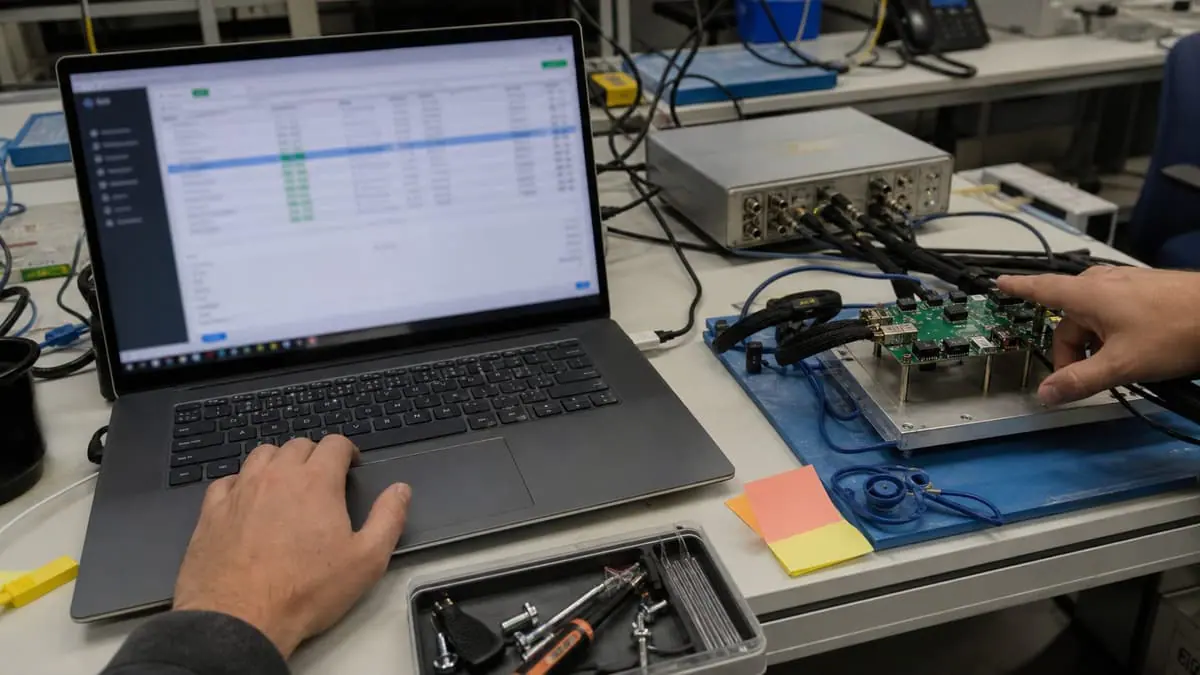
Engineering software validation bench with laptop, cabled fixture, and measurement hardware
Quote-stage validation checks the full workflow: hardware, fixture, software, reporting, and acceptance evidence.

RFQ evidence

Application, operating range, interface, fixture, software, reporting, and support requirements are reviewed before quotation.

Risk control

Validation catches underspecified frequency, power, channel count, cabling, thermal, safety, and automation requirements early.

Acceptance plan

The quote can define FAT, SAT, calibration references, test records, and documentation deliverables.

Buyer fit

Built for teams that need accountable engineering review, not just anonymous catalogue fulfilment.

Procurement is an engineering checkpoint

A test system purchase usually fails when the RFQ is too thin. Missing cable stability, fixture geometry, power headroom, trigger timing, instrument interface, or reporting requirements can turn an apparently correct bill of materials into a system that cannot pass acceptance. XGY Tek treats procurement validation as a formal engineering step.

  • Confirm application, device under test, operating envelope, and acceptance method
  • Map instruments, fixtures, cables, software, power, safety, and support into one requirement set
  • Define what the buyer will inspect at receiving and what XGY Tek will verify before shipment
  • Record exclusions, assumptions, export screening needs, and change-control triggers

Validation questions before quotation

The first review asks whether the requested system is measurable, repeatable, supportable, and exportable. A buyer should expect questions about frequency range, voltage range, power dissipation, channel count, automation interface, data format, physical envelope, site utilities, and acceptance thresholds.

  • RF: frequency range, connector type, cable length, VSWR, phase stability, and calibration plane
  • Power: voltage, current, ripple, transient behavior, regeneration, safety interlocks, and cooling
  • Automation: IO count, bus protocol, timing, operator workflow, report format, and revision control
  • Export: destination, end use, end user, documentation language, and delivery terms

Outcome of a good validation process

The outcome is not simply a price. It is a documented purchase basis: what is included, what is excluded, what is tested, which records are delivered, and how the buyer should judge acceptance.

  • Acceptance checklist linked to quote line items
  • Configuration and software version records
  • FAT/SAT method with measurable pass/fail language
  • Procurement notes that reduce rework during delivery

Engineering FAQ

What is procurement validation? +

It is the engineering review that confirms a quoted system can meet the buyer application, acceptance criteria, documentation needs, and delivery constraints before the order is released.

Why is a product datasheet not enough? +

A datasheet describes a device. Procurement validation checks the whole system, including cables, fixtures, software, utilities, thermal limits, safety, reporting, and export constraints.

Can XGY review an existing RFQ? +

Yes. Send the RFQ, target test method, expected device under test, operating envelope, and acceptance requirements so the team can identify missing fields before quotation.

Does procurement validation replace customer acceptance? +

No. It prepares the purchase basis. Formal FAT, SAT, receiving inspection, or commissioning checks still need to be scoped and agreed.

Quote-stage validation

Send the requirement list before selecting the bill of materials.