
Products
Source Measure Units
Compare XMU Source Measure Units
Source Measure Units (SMUs) combine programmable sourcing and measurement in one PXIe module, so the parameter that binds first is the source-and-measure envelope the device under test actually needs, not the channel count. The four-channel XMU-5422 and XMU-5421 share a +/-24 V and +/-150 mA envelope at 600 kS/s in a 3U, 4 HP module, and are separated only by resolution grade: 10 pA and 20 uV on the XMU-5422 against 100 pA and 200 uV on the XMU-5421.
The 32-channel XMU-5921 trades that envelope for density, sourcing within +/-15 V and +/-32 mA at 1 MS/s with 80 pA resolution on its 5 uA range, so it answers a throughput problem rather than a precision one - a device needing +/-24 V does not become a 32-channel job by adding channels.
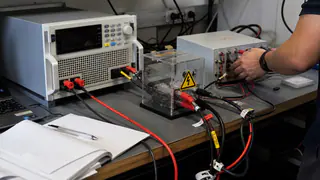
At the low-current end the fixture, cabling, and guarding decide the result as much as the module does, which is why a credible measurement record should carry the selected current range, compliance setting, integration or aperture time, settling delay, guarding and cable type, fixture or probe station details, reference-device reading, repeatability run, and raw data export.
Settle the required source ranges, compliance limits, sweep or pulse timing, number of biased terminals, software interface, and report format before requesting a quote.
Source Measure Units product list
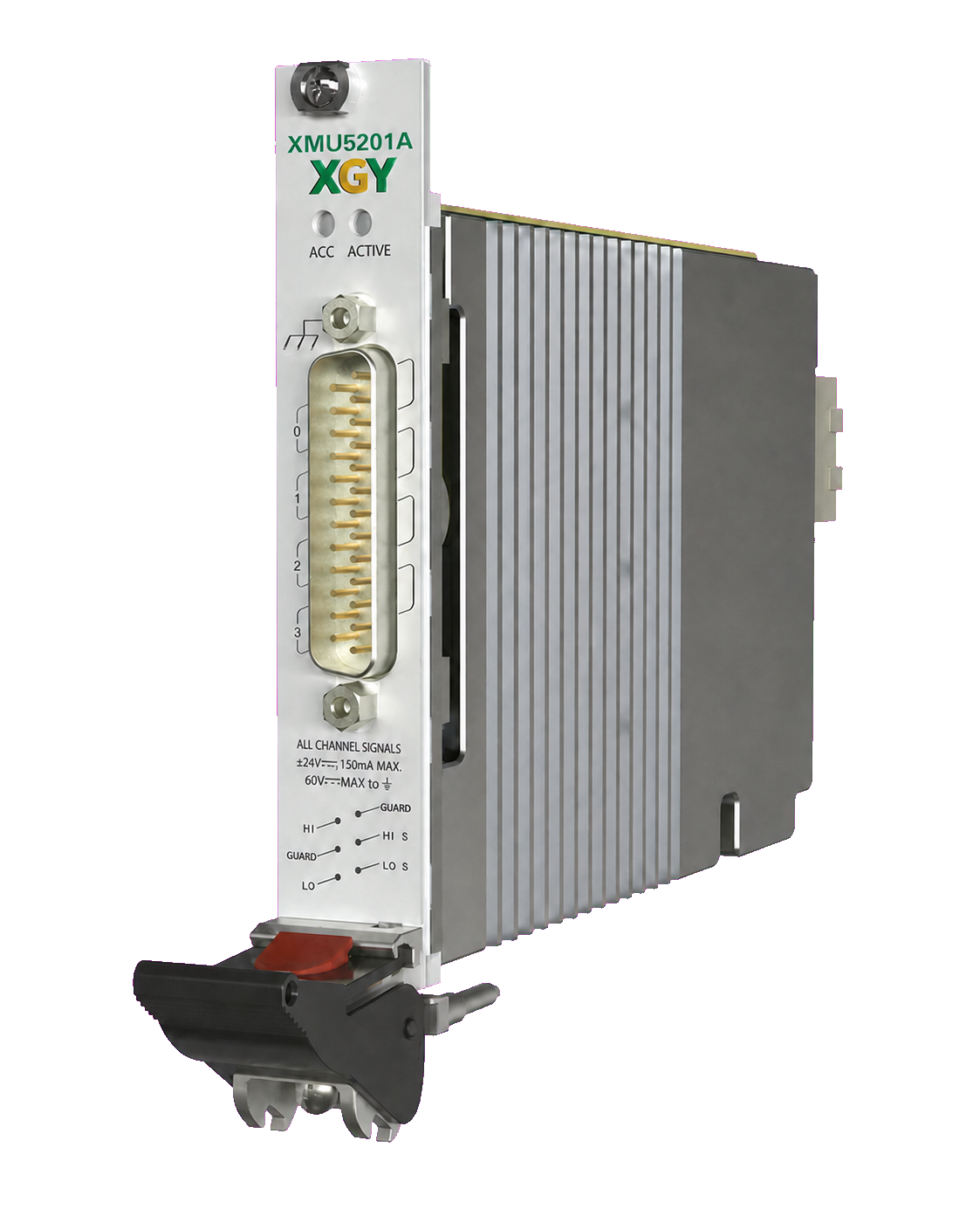
Best fit
Four-channel low-current characterization requiring the highest precision among these models.
XMU-5422 Four-Channel High-Precision Source Measure Unit
- Voltage range: ±24 V
- Current range: 10 µA / 100 µA / 1 mA / 10 mA / 150 mA
- Current sensitivity: Down to 10 pA
- Sampling: 600 kSa/s
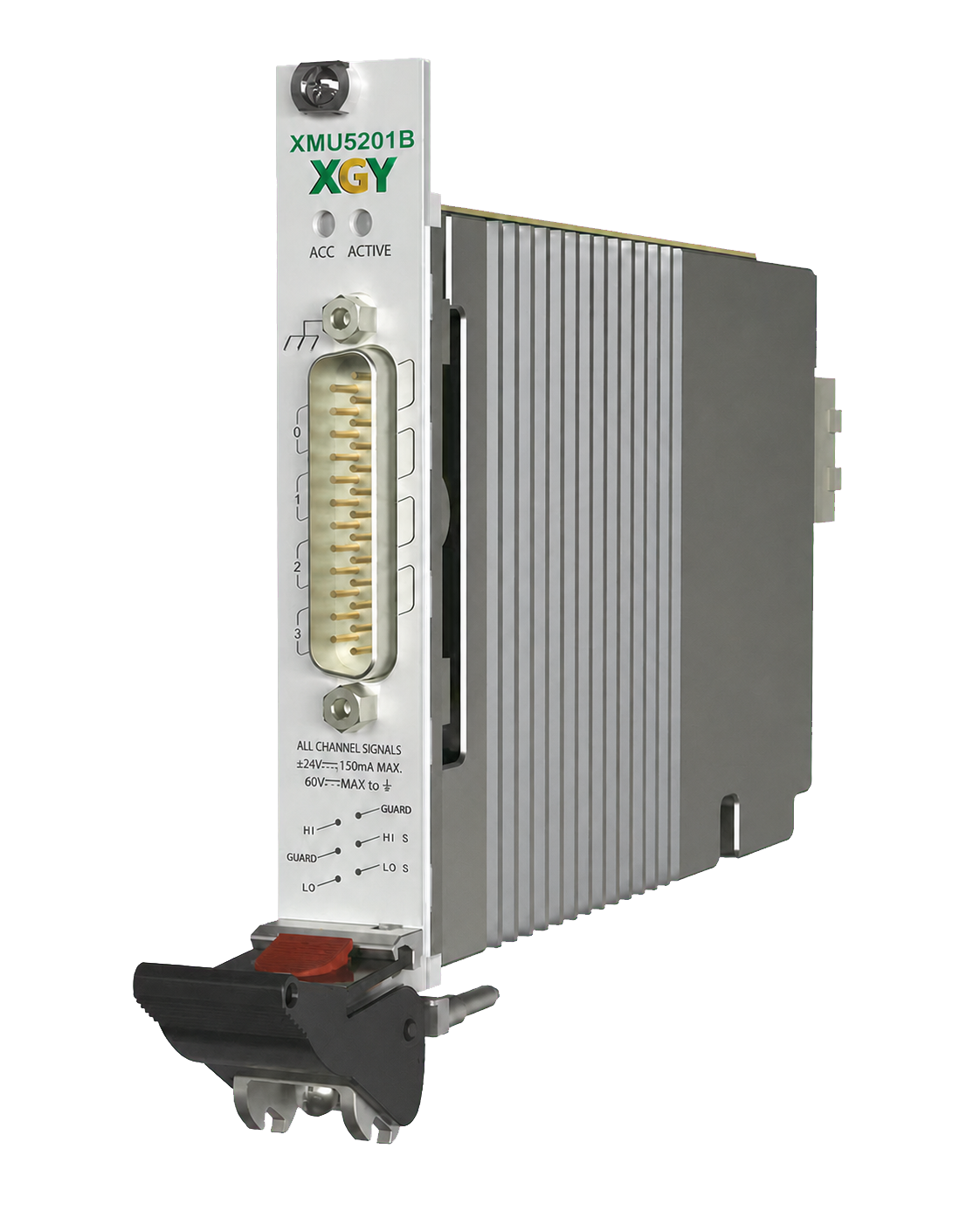
Best fit
Four-channel automated device characterization where 100 pA current resolution is sufficient.
XMU-5421 Four-Channel High-Precision Source Measure Unit
- Voltage range: ±24 V
- Current range: 10 µA / 100 µA / 1 mA / 10 mA / 150 mA
- Current sensitivity: Down to 100 pA
- Sampling: 600 kSa/s
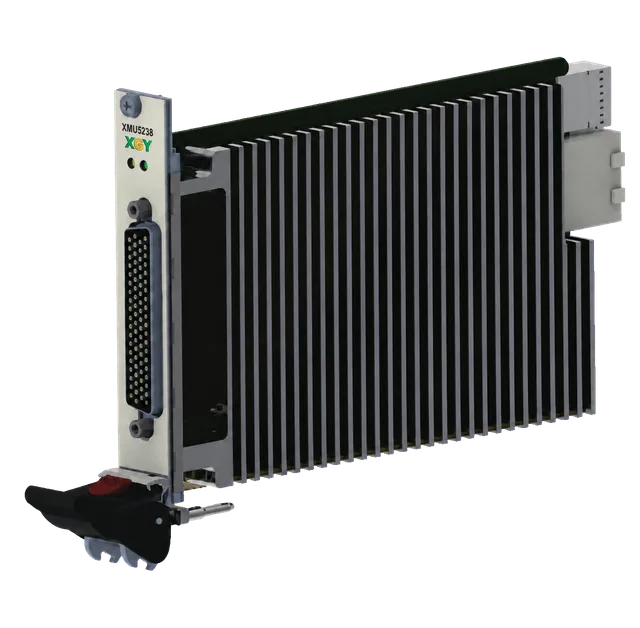
Best fit
Synchronized high-density semiconductor, sensor, LED/LD, and battery characterization.
XMU-5921 32-Channel Source Measure Unit
- Channels: 32 synchronized source-and-measure channels
- Voltage range: ±15 V operating envelope
- Current range: ±32 mA operating envelope
- Sampling: 1 MSa/s
Selection path
XMU Model Comparison
Use the model pages and current datasheets for the released configuration limits and conditions.
- XMU-54223U PXIe, 4 HP
- Coverage
- 4 channels; ±24 V voltage range; ±150 mA maximum current range; 600 kSa/s sampling; current resolution down to 10 pA
- Best fit
- Four-channel low-current characterization requiring the highest precision among these models.
- XMU-54213U PXIe, 4 HP
- Coverage
- 4 channels; ±24 V voltage range; ±150 mA maximum current range; 600 kSa/s sampling; current resolution down to 100 pA
- Best fit
- Four-channel automated device characterization where 100 pA current resolution is sufficient.
- XMU-59213U PXIe, 78-pin D-Sub
- Coverage
- 32 channels; ±15 V and ±32 mA operating envelope; 1 MSa/s sampling; current resolution down to 80 pA
- Best fit
- Synchronized high-density semiconductor, sensor, LED/LD, and battery characterization.
Frequently Asked Questions
When should XMU-5422 or XMU-5421 be chosen over XMU-5921?
What acceptance checks should be run for low-current SMU work?
What information should be sent with an SMU enquiry?
Why does compliance behavior matter?
When is guarding mandatory?
Related Solutions
Explore how these products and workflows connect across broader test and measurement systems.
Selection Guides
Read buyer's guides to choose the right instrument or system for your application.