
Products
Tunable Laser Sources
Tunable Laser Sources for Wavelength Sweeps
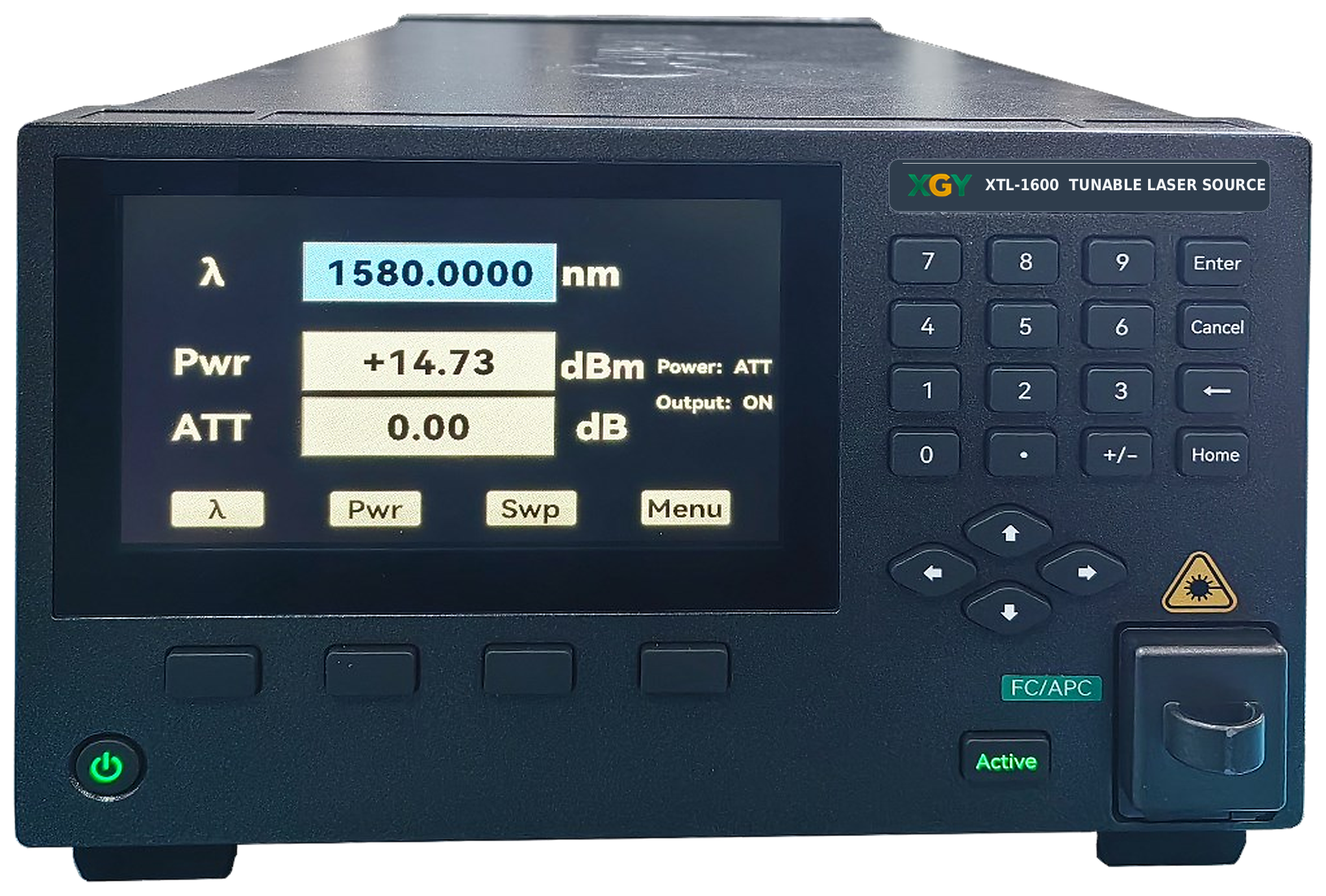
Tunable laser sources support wavelength-dependent optical component characterization, fibre testing, spectroscopy, and photonics measurement. The XTL-1600 provides a standard 1500 nm to 1600 nm tuning range with continuous mode-hopping-free wavelength sweeping.
Review wavelength accuracy and repeatability, scanning speed, linewidth measurement method, optical power stability, and the FC/APC optical interface against the intended measurement. Narrow linewidth and wavelength sweeping support optical frequency domain reflection analysis, while synchronous trigger-level output supports component characterization during scanning.
Read the detailed specifications and their test conditions before comparing performance: the datasheet specifies at least one hour of warmup and excludes water-absorption wavelengths from the stated specifications.
Selection path
Tunable Laser Source Selection
Match the wavelength band and measurement workflow, then review the selected product page and datasheet for performance values and test conditions.
- XTL-1600Tunable laser source
- Coverage
- Wavelength tuning range 1500 to 1600 nm
- Best fit
- Optical component characterization and OFDR.