Products
Network Analyzers
Vector Network Analyzers for Broadband S-Parameter Measurement
Choose an XGY vector network analyzer by the highest frequency the device under test actually requires, the number of physical RF ports, the calibration plane, and the fixture or cable arrangement. The YNA-3674 series covers 10 MHz to 120 GHz coaxial as standard, with a 500 Hz floor available as a low-frequency expansion option on models to 67 GHz; the configured model sets the ceiling, with single-unit models through 110 GHz and a separate controller with 1.0 mm extender modules for the 110 and 120 GHz configurations.
Up to 30 MHz IF bandwidth supports fast sweeps and narrow-pulse measurement, and up to 200001 measurement points with 140 dB optimum dynamic range suit semiconductor chip, material, antenna, high-speed cable, and microwave component work.
Network Analyzers product list
Best fit
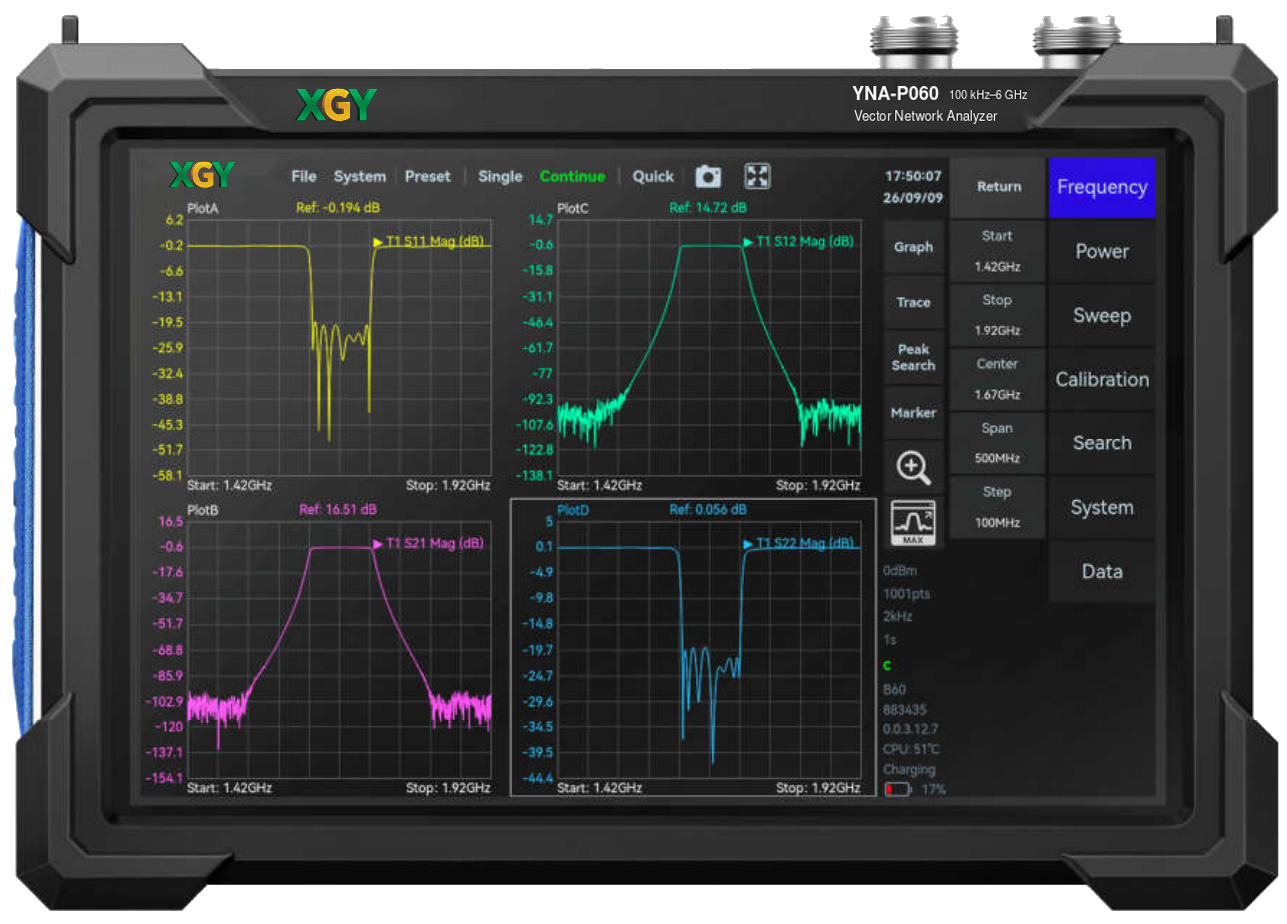
Portable laboratory and field S-parameter measurements with VNStudio, SCPI control, ECB-60 calibration, and matched RF accessories.
YNA-P060 Handheld Vector Network Analyzer
- Frequency range: 100 kHz to 6 GHz
- Number of ports: 2 ports
- Dynamic range: 100 to 120 dB (Typical)
- Battery life: 5-hour battery life with power bank support
Best fit
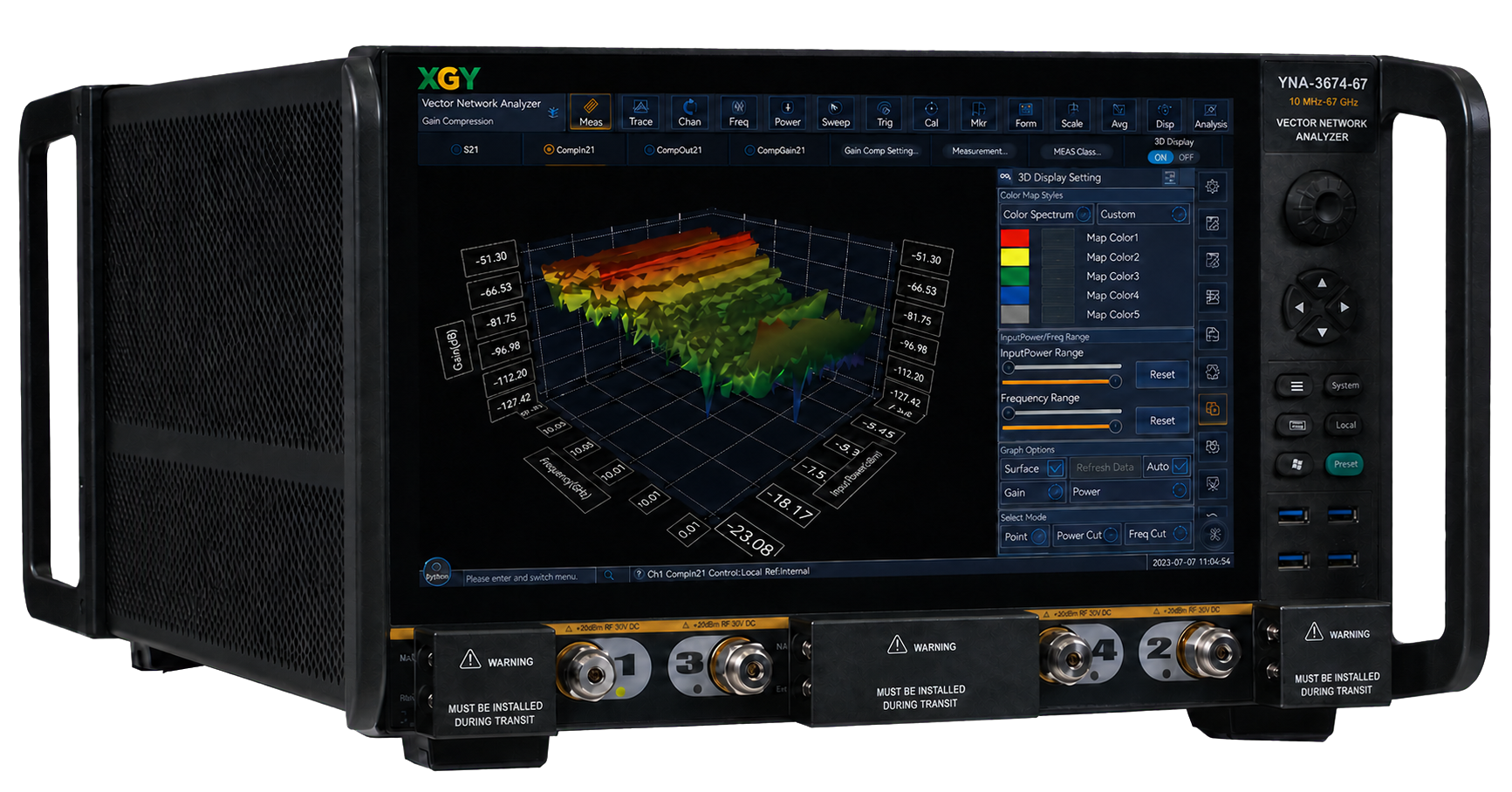
Semiconductor chip, material, antenna, high-speed cable and microwave component measurement where one instrument must cover the whole band.
YNA-3674 Series Vector Network Analyzer
- Frequency range: 10 MHz to 120 GHz (By model)
- IF bandwidth: 1 Hz to 30 MHz
- Measurement points: Up to 200,001 (Stated for the series)
- Pulse resolution: As low as 8.3 ns (Stated for the series)
Selection path
Compare XGY Vector Network Analyzers
Use the required frequency ceiling, physical port count, and calibration plane to confirm the configuration before ordering, since the frequency limit and connector interface are fixed at order time.
- YNA-P060Handheld vector network analyzer
- Coverage
- 100 kHz to 6 GHz; two-port S-parameter measurement
- Best fit
- Portable laboratory and field S-parameter measurements with VNStudio, SCPI control, ECB-60 calibration, and matched RF accessories.
- YNA-3674 SeriesSingle unit, or extender-based with separate controller (YNA-3674-110-A/-120-A)
- Coverage
- 10 MHz to 120 GHz standard, by model; 500 Hz low-frequency expansion with option -203 (2-port) or -403 (4-port), models to 67 GHz
- Best fit
- Semiconductor chip, material, antenna, high-speed cable and microwave component measurement where one instrument must cover the whole band.
Frequently Asked Questions
How high in frequency does the YNA-3674 series go?
How many RF ports are available?
What makes this analyzer suitable for pulsed and fast measurement?
What information should be supplied for a network analyzer quote?
Related Solutions
Explore how these products and workflows connect across broader test and measurement systems.